SLAVYANGRAD.org
Latest Post
What happened to the DPR and LPR mines?
Original Article: RBK

The authorities of the Donetsk and Lugansk People’s Republics (LPR and DPR) have leased 15 coal mines to Russian companies since the beginning of the year, and three more mines in the DPR will be transferred in the coming months. The tenants promise to invest more than 65 billion rubles in the received facilities.
How many mines are there in the DPR and LPR?
In the autumn of 2014, the first deputy Minister of the Ministry of Energy and Coal of Ukraine, Yuri Zyukov, said that before the start of the military conflict in Donetsk and Lugansk regions (until 2014), 95 mines were operating on their territory. In 2023, former Russian Energy Minister Nikolai Shulginov mentioned 114 mines, some of which are under conservation or in the liquidation stage. At the same time, he announced that 15 mines should remain in these regions.
Continue readingOriginal article: Dmitry Stefanovich / Translated by @GBabeuf
Researcher at the Center for International Security at the National Research Institute of World Economy and International Relations named after E.M. Primakov
The year has been difficult – it’s a corny line, but it’s true. Let’s start with the main thing: the “new (non)normal” has finally taken shape, and they are trying to adapt to it with varying degrees of success. Although, of course, in some areas, some actors retain the desire to live as their grandparents lived. But alas, no, if you just ignore current events and changes, that won’t make them go away.
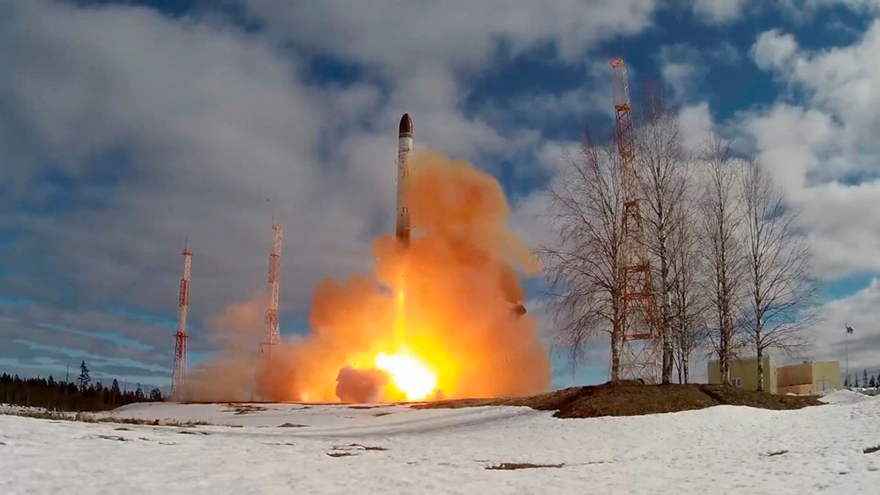
On the military-political track, there is a continuation of the collapse of the framework of traditional arms control (suspension of the 2010 START Treaty, de-ratification of the Comprehensive Test Ban Treaty, final withdrawal from the Treaty on Conventional Armed Forces in Europe). However, relative restraint is demonstrated both in terms of political signals and the preservation of individual elements (for example, notifications of ICBM launches), and in the military-technical field: the activity of testing new strategic weapons systems is routine in nature (and for some “new products”, for example, the promising heavy ICBM “Sarmat” is completely too leisurely). Even the traditional autumn exercises of the Russian strategic deterrence forces looked deliberately modest and were conducted with an emphatically retaliatory scenario.
Continue readingOriginally posted on SLG Analytica
Original Article: Alexey Volinets / Translated by @GBabeuf
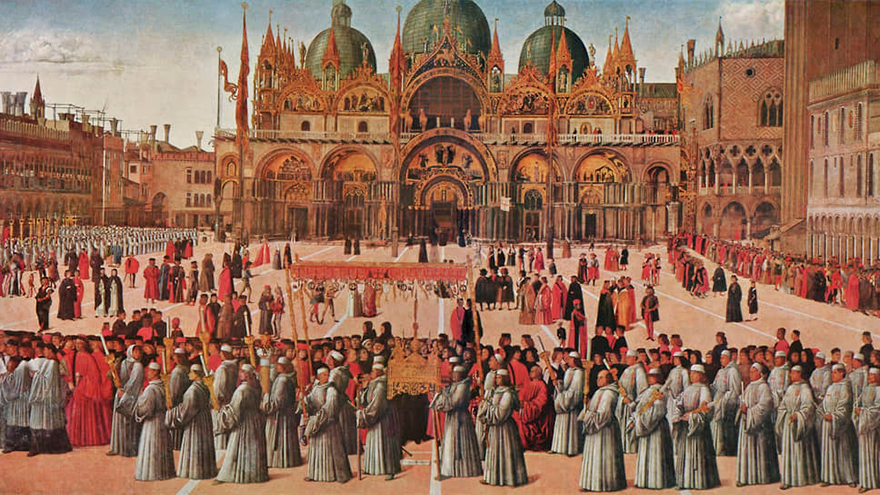
There is a common and long-standing notion that Russia and the Russian government are comparable to “Byzantium” and “Byzantine ways.” Meaning: bureaucracy, intrigue, everything behind-the-scenes and all that. Such comparisons arise here and there quite often. Both inside Russia and outside of it—in the West. The West, the heir to the Crusaders who once plundered Constantinople, actually originated the idea of Byzantium, the former “Second Rome”, as something rather dark, bureaucratic, despotic and steeped in intrigues.
But here we aren’t talking about the West and its phobias and Russophobia, but about the constant comparison of Russia with this imagined “Byzantium”. “The Byzantine tradition is to weave intrigues, not to work,” the home-grown liberal Remchukov [Konstantin Remchukov, Editor-in-Chief and CEO of Nezavisimaya Gazeta –ed.] tells us in regard to Russian reality on the pages of the American political magazine The National Interest. Well, it is quite understandable what interests the Remchukovs and their Western patrons have… I cite this sentence only as another example of the long-stereotyped comparison of modern Russia with ancient Byzantium.
Continue readingOriginally posted on SLG Analytica
The following is offered here as a reflection of the thinking of circles close to the Kremlin, and not necessarily as reflecting positions of which this channel “approves”. One thing that emerges, though, is that these circles are fully aware a) that the current forms of warfare at the front will not lead to any kind of “victory” over Ukraine and that b) those forms of warfare are a deliberate choice based on an unwillingness to achieve a decisive outcome—unlike the apostles of “attritional warfare” who have convinced themselves that it will take them all the way to Kiev and are busy reviving discredited military strategists to defend such a position.

About the Cunning Plan
Original Article: Global Affairs / Translated by: @Gbabeuf
The military conflict with Ukraine caused an emotional wave of rare strength in our society, and throughout the world. Dashing cavalry advances, which gave either side hopes of a quick victory, gave way to immobile positional confrontations. The elation of many was replaced by resignation and burnout—it seems that there is a hopeless dead end ahead, and that the Special Military Operation (SMO) has become aimless and has been reduced to storming useless Ukrainian villages and nameless forest plantations. It appears, however, that this is not the case.
In a previous note we talked about why we cannot advance in Ukraine on a broad front, occupy Kharkov, the Russian city of Odessa, and so on. And here’s another reason: we don’t really want to. Or rather, President Putin doesn’t want to.
Continue readingWritten by Luis of Slayangad. Originally posted on SLG Analytica
Why the West can’t build anything even when needed and what it means to Russia and the war
Many people are waiting for the moment Russia will win the war against the entire collective West by WO: when this bloc with 30+ of the richest countries in the world will give up or be unable to continually waste money and material in Ukraine. This would be the case if the financial system wasn’t a rigged game and those countries were actually forced to live within their means and bound to the resources they have, like Russia does. Instead, they can just keep printing their endless dollars and euros, dump them across the globe, and force the countries they enslave to hand in their resources.
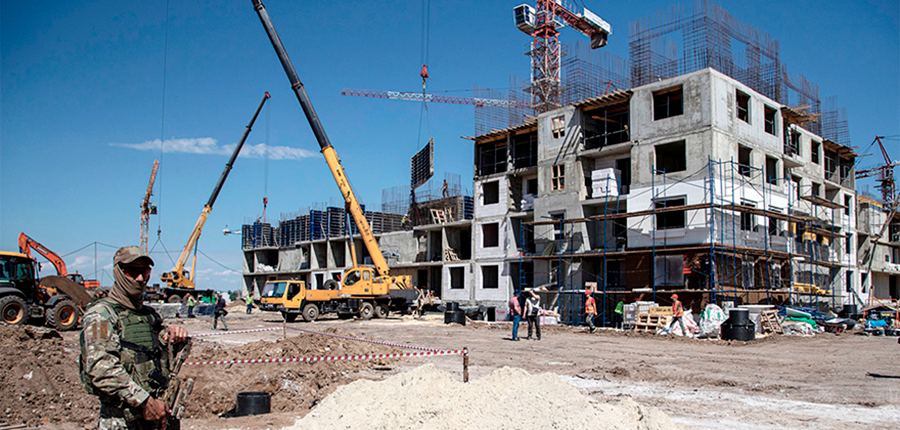
There is though one self-imposed limitation that might bring their ability to wage war to an end, which is the same neoliberal system they implemented across the globe. While the bad aspects of their economy are simplistically dismissed as “bureaucracy”, they are structural, intentional and an unchangeable dogma, trusted at a religious level. After decades of treating industry and technical professions literally as a burden, Western countries are facing difficulty to scale up their military industry as their army of web programmers and market analysts isn’t quite useful for that.
Continue readingLatest map of hostilities (25/01)

Our Partners:

 SLAVYANGRAD.org